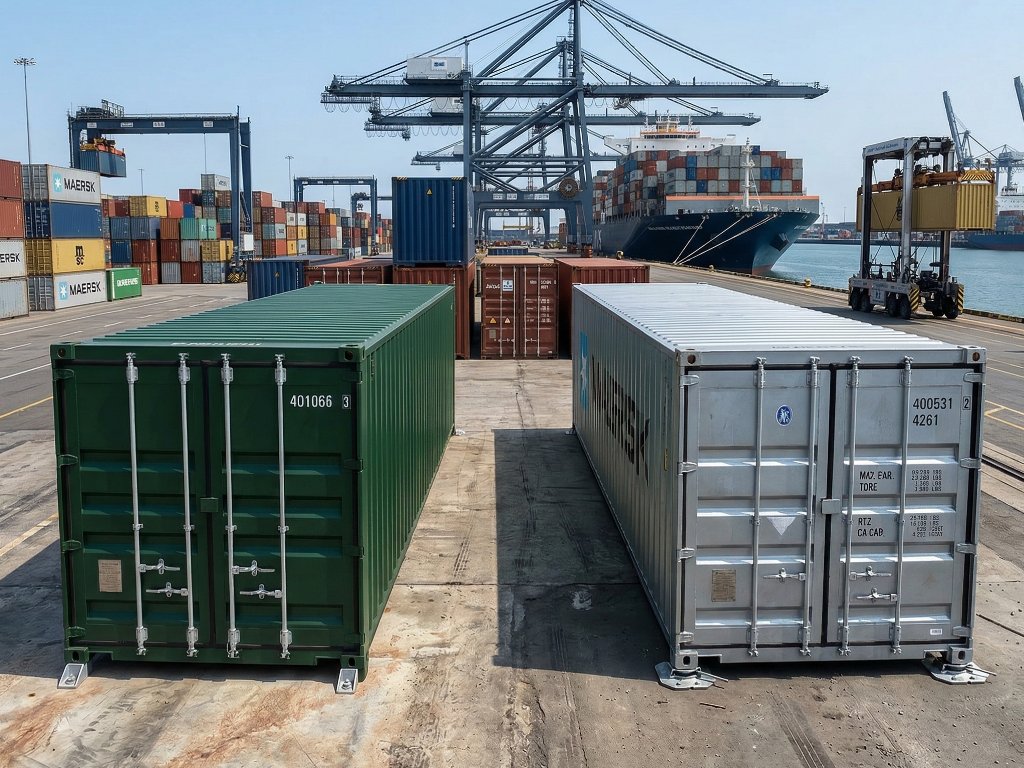
Which corner casting is right for your construction?
Corner castings are a central component of containers and container-based structures. They serve as standardised connection points when a structure needs to be lifted, stacked, transported or secured using twistlocks, stacking cones and other container equipment. Corner castings are available in different materials. The right choice depends on factors such as the structure’s material, the…

Should a shipping container be raised or levelled? Choosing the right solution
Shipping containers are rarely installed under identical conditions. Some projects require additional clearance beneath the container, others need a solution that can be installed and removed quickly, while in many cases the main challenge is uneven ground rather than additional height. For this reason, there is no single Height Adapter that suits every application. The…

Is Your Container Ready for Summer Weather?
Summer is not just about sunshine and high temperatures. Hot days, cooler nights, high humidity and periods of heavy rain can affect both the container and what is stored inside. A steel container reacts quickly to its surroundings. Direct sunlight can heat the steel, temperature fluctuations can increase the risk of condensation, and heavy rain…

5 Mistakes That Make Your Shipping Container an Easy Target for Break-Ins
Shipping containers are often used to store valuable tools, machinery, equipment, and materials. Yet, security is frequently overlooked until after a break-in has already occurred. In many cases, a break-in isn’t caused by one major mistake—but by several small ones that together make a container an attractive target. Here are five of the most common…

Galvanised Container Top Platform – Extra Space for Festivals, Events and Professional Projects
Summer is peak season for festivals, concerts, events and temporary installations. As sites quickly fill up with stages, technical equipment, containers and materials, the same challenge appears time and time again: There is not enough space on the ground. Sound systems, lighting, cables, generators, materials and technical equipment all require valuable space. At the same…

ConFoot container legs: From container delivery to temporary workspaces
Today, containers are used for much more than transportation and storage. They serve as warehouses, workshops, technical rooms, offices, and temporary logistics hubs. However, getting the most out of a container often requires flexibility in how it is set up. This is where ConFoot container legs can make a difference. Quick Setup Without Unnecessary Delays…

Stacking Containers – Why are the last few centimetres often the biggest challenge?
At first glance, stacking containers seems straightforward. You simply place one container on top of another. In practice, however, it is often the last few centimetres that determine whether the operation is completed quickly and smoothly or requires multiple corrective manoeuvres. The higher containers are stacked, the more difficult it becomes to see exactly how…
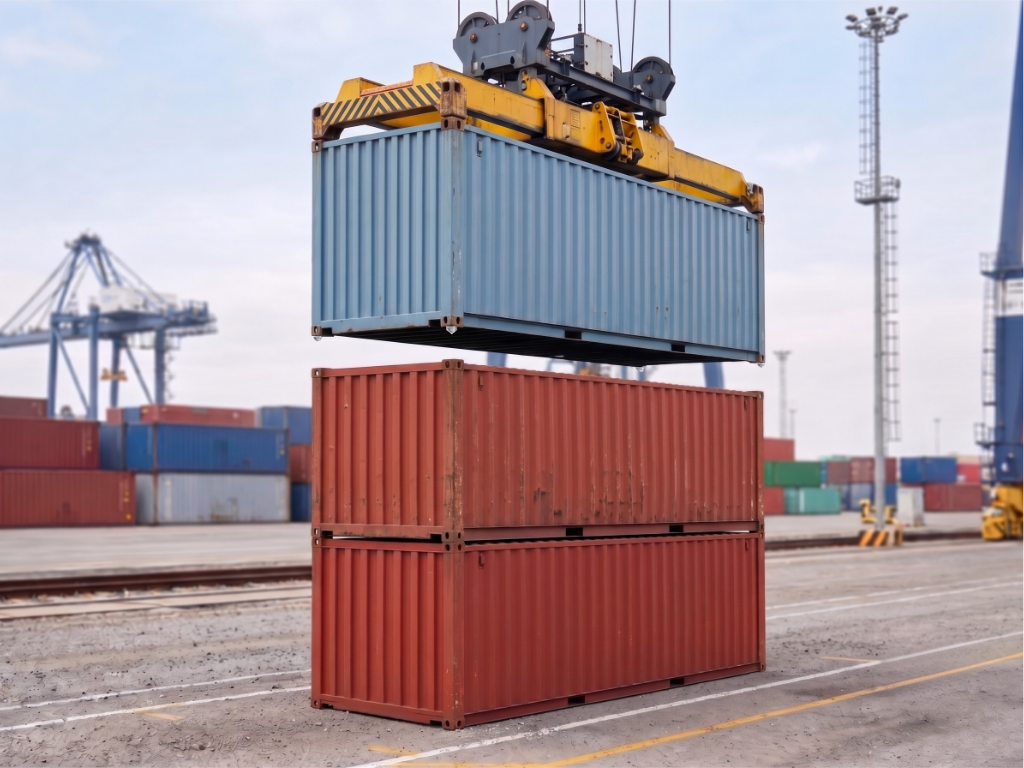
Container lifting: when the right lifting solution makes the difference
Container lifting seems simple. Until it isn’t. A container needs to be moved from one location to another. In practice, however, lifting is often one of the most critical moments in a container’s entire lifecycle. Container lifting takes place every day on construction sites, terminals, ports, industrial facilities, and offshore installations. At the same time,…
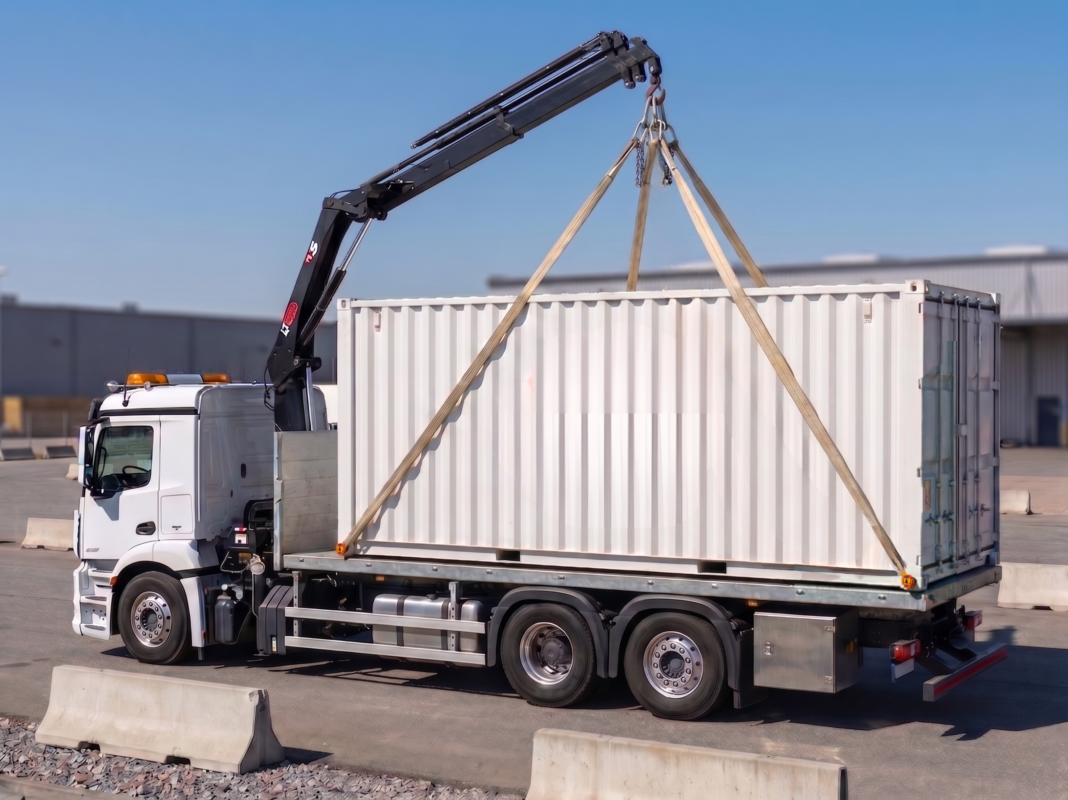
Container Mounting Kits – when multiple containers need to work as one complete solution
Two containers placed side by side may seem like a simple solution. But in practice, problems often appear quickly: Movement between the containers Leaks in the connection Wind and water between the units A setup that feels unstable and temporary This becomes especially noticeable on construction sites, offshore installations and storage areas, where containers are…
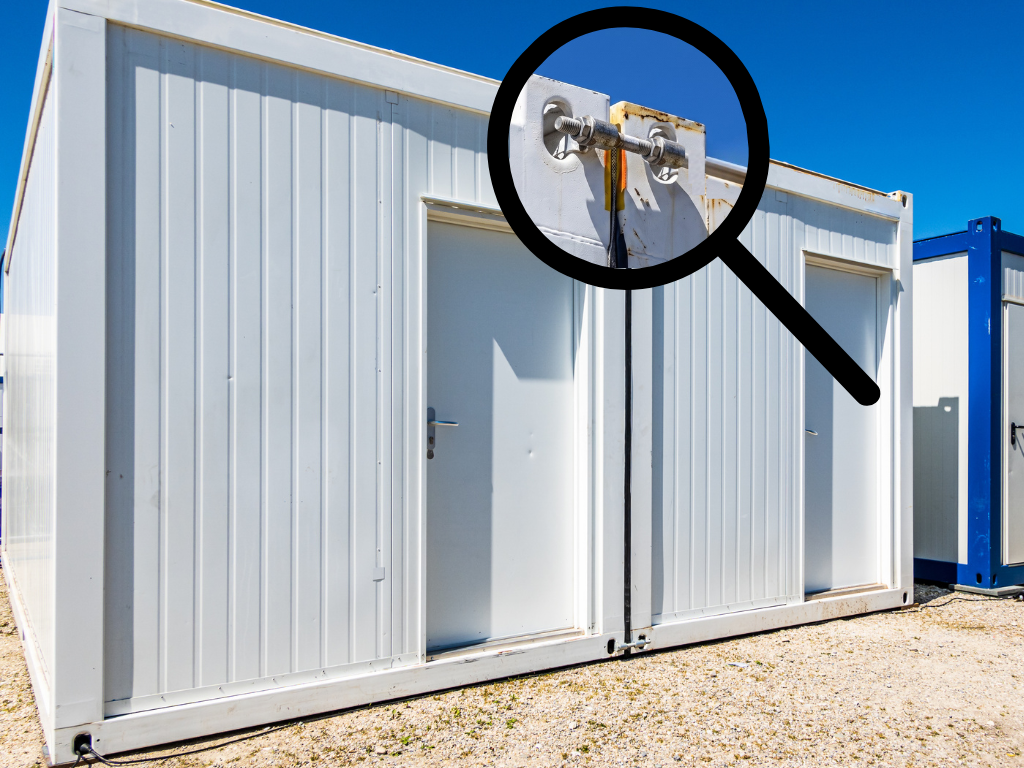
Roof Bracket for Containers – when Domino Clamp alone is not enough
You already have mounting points in the corner castings with Domino Clamp. But what happens when the construction continues across the full length of the container? That is where many projects run into a practical problem: 👉 A stable mounting point is missing in the middle of the container’s top side rail. In practice, this…
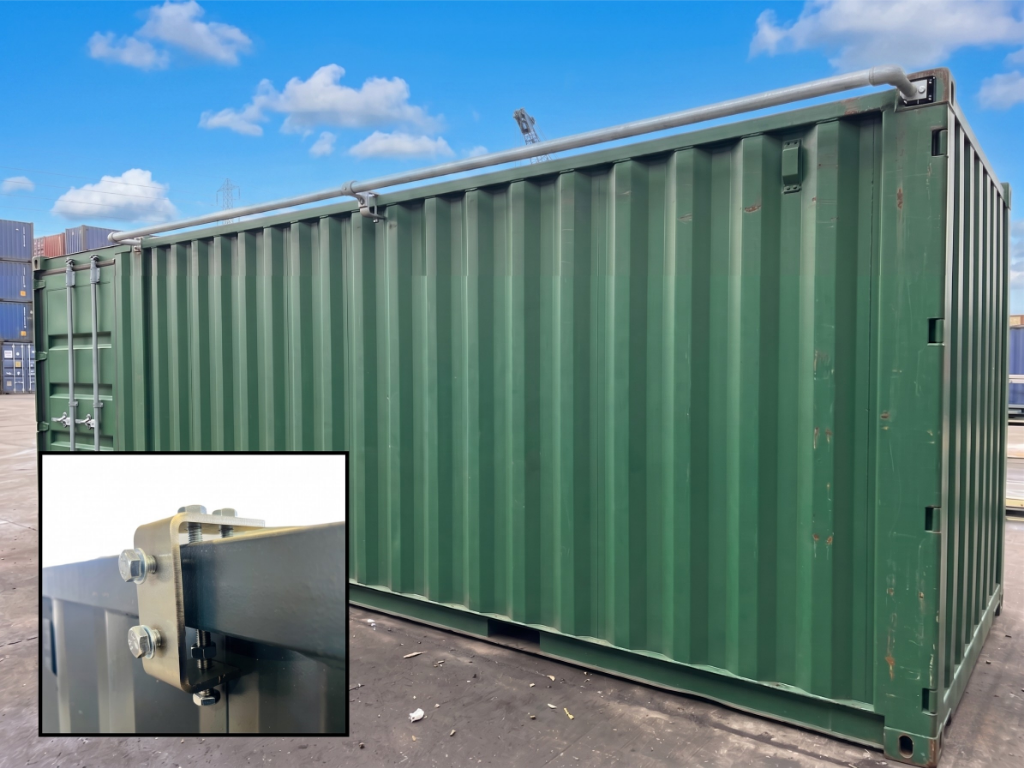
Domino Clamp: build on your container – without damaging it
Domino Clamp: build on your container – without damaging it You want to build something onto your container. A roof.A railing.A banner frame.Lights. Cameras. Solar panels. A steel structure. But you do not want to drill or weld into the container. This is where many solutions become complicated. Because as soon as you start drilling…
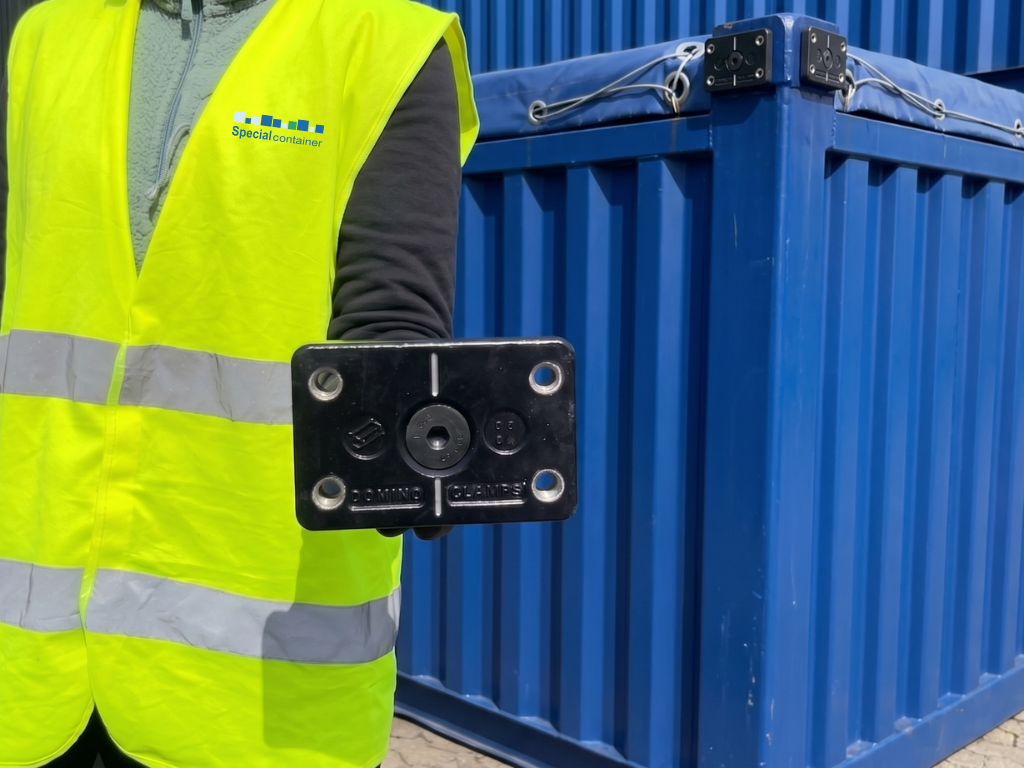
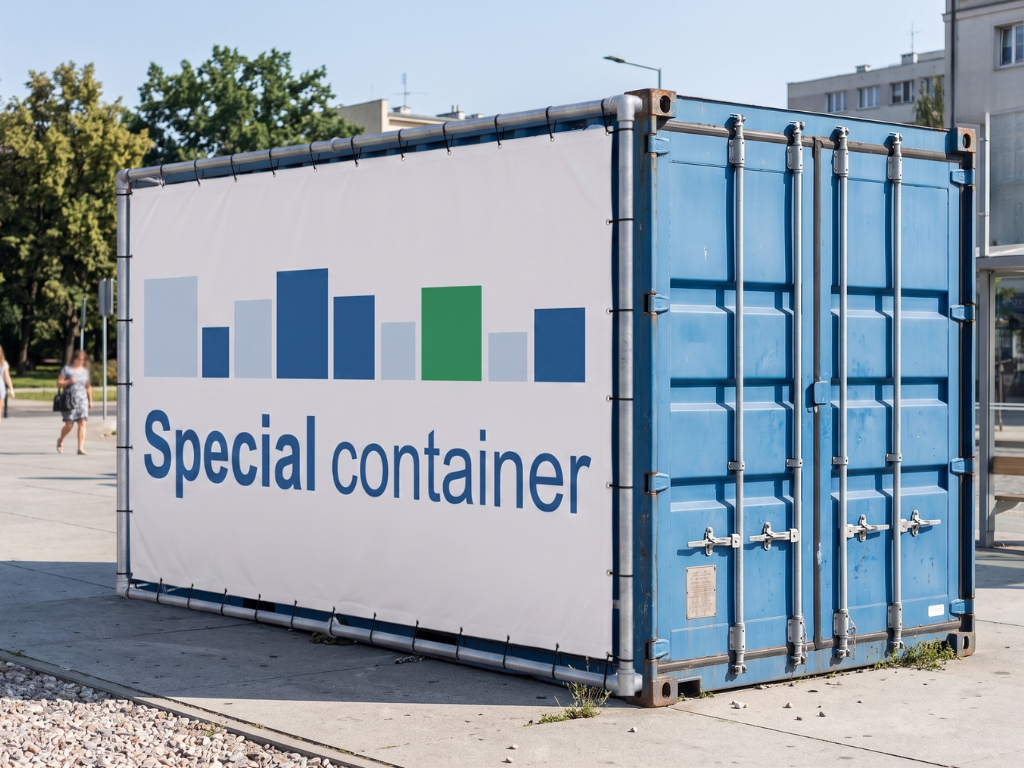
Hang a banner on a container – 2 effective solutions without drilling
How to mount a banner on a container – without damaging the structure You have a container. You want to mount a full-size banner. But there’s one clear limitation:👉 You don’t want to drill or weld into the container That makes sense. Once you start making holes in the steel, you affect both the structure,…
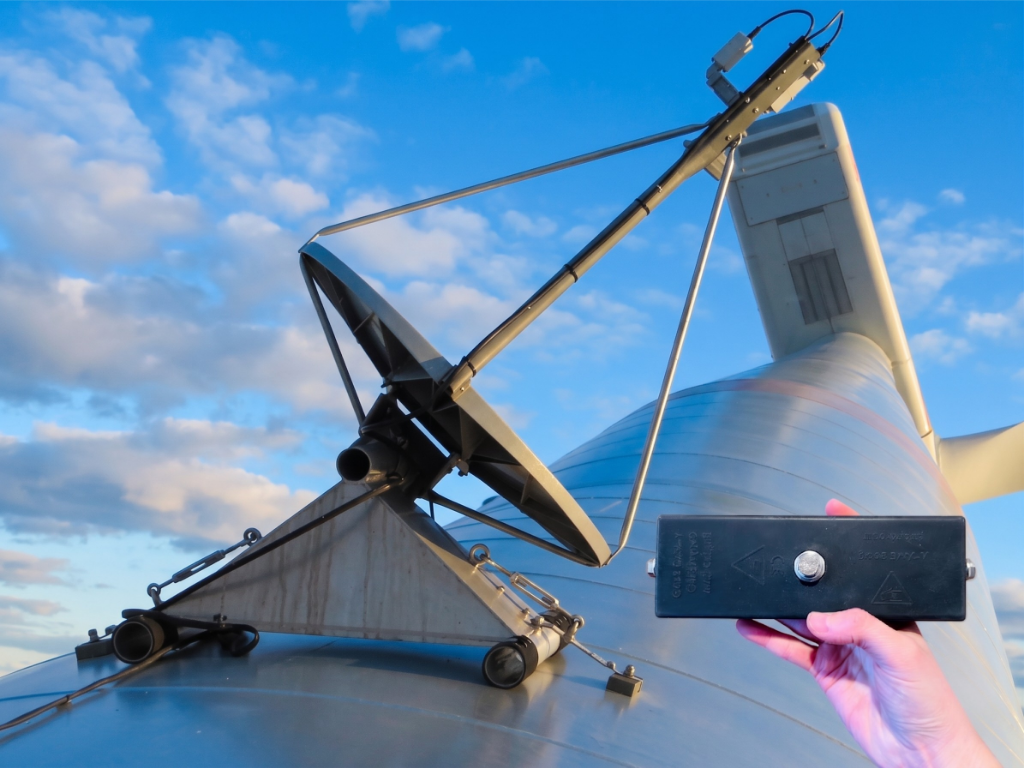
V-MAG industrial magnets: flexible mounting in heavy industry, wind & energy and oil & gas
In heavy industry, wind & energy and oil & gas, the same challenge keeps coming up:You need to mount equipment on steel surfaces – quickly, safely and without damaging the structure. • drilling weakens the structure and takes time• welding is permanent and requires preparation• temporary solutions are often unstable This applies on construction sites,…
Bridge fittings – when multiple containers need to work as one solution
When several containers are placed side by side, challenges quickly arise in practice Even if the containers are positioned close together, they are not actually connected. This means that even small movements – caused by wind, load, or daily use – can create issues over time. Typical challenges: movement between containers gaps and leaks in…
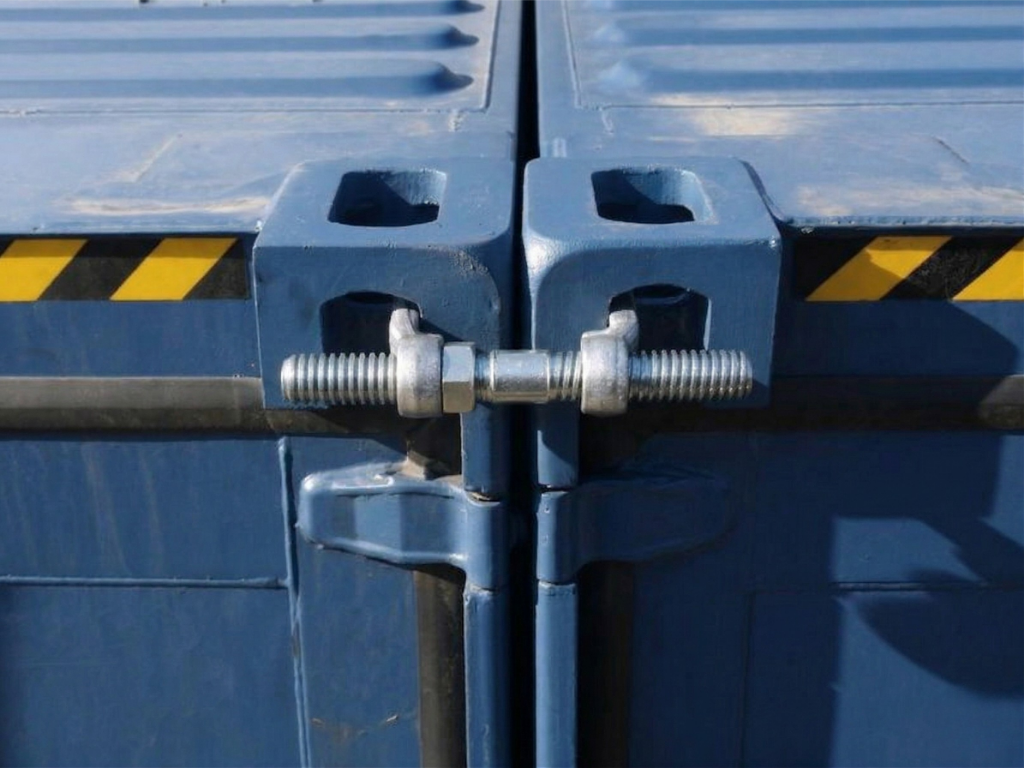
Two simple ways to secure containers on concrete – flexible vs permanent
Placing a container on concrete seems straightforward. But in practice, the real challenge appears after installation: the container needs to be repositioned stability becomes critical in daily use installation takes longer than expected Many solutions end up being either: too temporary and unstable or too fixed and difficult to adjust The key question is not…