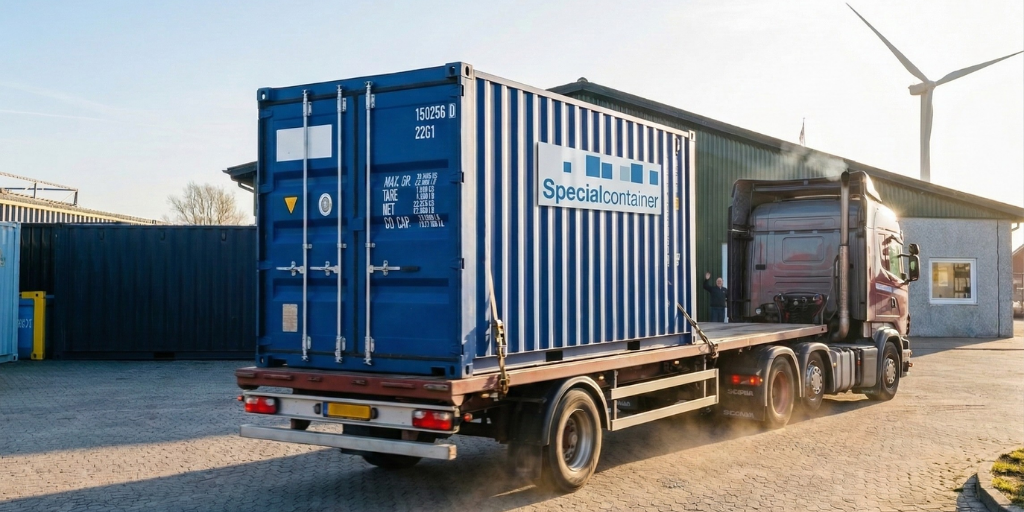
Summer is not just about sunshine and high temperatures. Hot days, cooler nights, high humidity and periods of heavy rain can affect both the container and what is stored inside.
A steel container reacts quickly to its surroundings. Direct sunlight can heat the steel, temperature fluctuations can increase the risk of condensation, and heavy rain can reveal problems with watertightness.
That is why it is worth asking: Is your container suitable for what you store inside – and for the conditions in which it is used?
At Specialcontainer, we offer different solutions depending on the challenge.
Does your container get too hot in summer?
When a steel container is exposed to direct sunlight, the temperature inside can rise. This can be a challenge when storing electronics, technical equipment and other materials that are sensitive to high temperatures or significant temperature fluctuations.
Solution: Insulated container or additional insulation
An insulated container can help reduce the impact of rapid temperature changes and create more stable conditions inside.
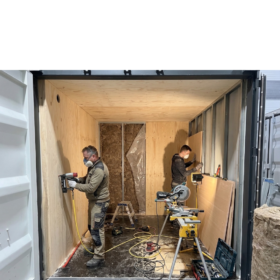
At Specialcontainer, we offer insulated containers, but we can also insulate one of our containers to meet your specific needs. This can be relevant for technical equipment, electronics, work equipment or projects where significant temperature fluctuations should be reduced.
However, it is important to remember that insulation is not the same as active cooling.
Does the content need to be kept at a specific temperature?
If goods or materials require a specific temperature range, insulation alone is not sufficient.
Solution: RF refrigerated container
An RF refrigerated container, also known as a reefer, is designed for active temperature control.
It can be relevant for:
- food products
- medical products
- laboratory materials
- certain chemicals
- other temperature-sensitive goods
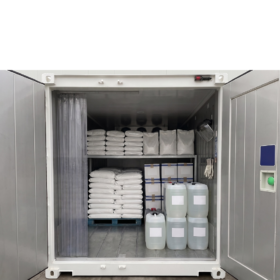
At Specialcontainer, we offer RF refrigerated containers for different needs.
Why does condensation occur inside a container?
Changes between warm days and cooler nights, combined with high humidity, can cause condensation. When warm, humid air meets cooler surfaces, moisture can form on the walls and ceiling – often referred to as “container rain”.
Over time, this can lead to rust, mould and damage to packaging, goods and equipment.
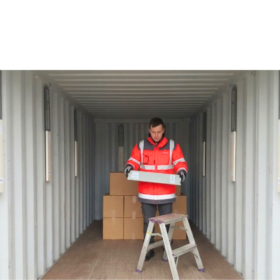
Solution: Absorpole® condensation remover
If excess moisture is the problem, Absorpole® can be a simple solution for improved moisture control.
Absorpole® absorbs moisture from the air and can help reduce the risk of condensation. It requires no electricity or complicated installation and can be used in both storage and transport containers.
The solution can be relevant for containers storing:
- packaging and cardboard boxes
- spare parts
- electronics
- machinery and technical equipment
- textiles and furniture
- other moisture-sensitive contents
This makes Absorpole® a practical solution that can also be used in containers already in operation.
Does water enter the container when it rains?
Heavy summer rain can reveal problems with the container’s watertightness.
One of the areas that should be checked is the doors and door seals. Over time, the rubber can become worn, cracked, hard or deformed. If the seal no longer closes properly, the risk of water entering around the doors can increase.
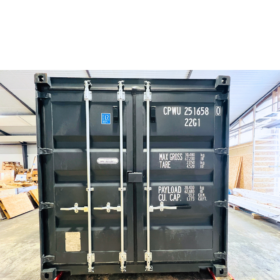
Solution: New container door seals
At Specialcontainer, we offer container door seals, allowing worn or damaged seals to be replaced.
Replacement may be relevant if:
- water enters around the doors
- the seal has visible cracks or damage
- the rubber has become hard or deformed
- the doors no longer seal as tightly as before
If water enters elsewhere, the container should also be inspected for damage, corrosion or leaks.
What about ventilation and storage?
Ventilation can help improve air circulation in some situations, but more ventilation is not automatically better. If the outside air is very humid, additional moisture may also enter the container.
It is therefore important to first understand where the moisture comes from.
It may also be a good idea to:
- avoid placing moisture-sensitive goods directly against steel walls
- avoid placing wet equipment directly inside the container
- check packaging for moisture
- ensure air circulation around stored goods where relevant
The right solution always depends on the container’s location, use and contents.
Which solution is right for your needs?
Summer challenges require different solutions:
High temperatures or significant temperature fluctuations?
Choose an insulated container – or have a container insulated to meet your needs.
Need to maintain a specific temperature?
An RF refrigerated container provides active temperature control.
Problems with moisture and condensation?
Absorpole® condensation removers help absorb excess moisture.
Water entering around the doors?
Check the door seals and replace them if they are worn or damaged.
At Specialcontainer, we offer solutions for different needs – from insulated containers and RF refrigerated containers to condensation removers and container door seals.
Not sure which solution is right for you? Contact us – we will help you find the right solution.


FAQ
1. How can you prevent condensation in a container?
Condensation can be reduced by limiting excess moisture and choosing a solution that suits the container’s use. Absorpole® condensation removers can help absorb moisture from the air without the need for electricity.
2. What is the difference between an insulated container and an RF refrigerated container?
An insulated container helps reduce rapid temperature fluctuations, while an RF refrigerated container actively controls the temperature. The right choice depends on whether the contents require more stable conditions or a specific temperature.
3. What should you do if water enters the container?
First, check the door seals for wear, cracks or deformation. If they are damaged, they can be replaced. The container should also be inspected for other damage or leaks.