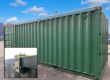
From standard container to functional solution
Containers are often purchased as standard products — based on size, availability, and delivery time. In practice, however, containers are rarely used as stand-alone units. They are expected to function as secure storage, mobile workspaces, technical rooms, or part of larger logistics and construction setups.
This is where challenges typically arise.
The challenge: when a container doesn’t work as expected
Many issues related to container use are not caused by the container itself, but by missing or inadequate components. Common problems include:
-
insufficient security and protection of contents
-
unstable positioning or uneven installation
-
limited usability for daily operations
-
additional costs caused by retrofitting or temporary solutions
Without the right components, a container often becomes a compromise rather than a reliable solution.
The solution: thinking in systems, not individual parts
At Specialcontainer, components are treated as part of a complete system — not as accessories. The purpose of each component is to support the container’s function in real working conditions.
Typical solution areas include:
-
Security
Locking and securing systems designed to protect both access points and contents -
Stability and installation
Components for leveling, positioning, coupling and stacking containers safely -
Operational functionality
Shelving, fixings and interior solutions that support efficient daily use -
Environmental protection
Sealing and protection solutions that reduce moisture, damage and downtime
By selecting components based on actual use cases, containers can be adapted quickly and reliably — without unnecessary complexity.
Starting with the right question
Rather than focusing on individual parts, the process starts with understanding how the container will be used:
-
What function should it serve?
-
Where will it be placed?
-
What environmental or operational conditions must it withstand?
This approach reduces errors, speeds up commissioning and helps ensure a lower total cost over the container’s lifetime.
Conclusion
A container only becomes a functional solution when its components are selected with purpose.
Containers are systems — and it is the components that determine whether they simply stand still or perform reliably in practice.
Click on the image and see the Twistlock categories

Click on the image and see container Moisture controls

Click on the image and see the Accessories category

Click on the image and see the Spare Parts category